Showing posts with label CharlieMBC. Show all posts

Tuesday, 17 December 2024

HOW TO GROW ONIONS (Adapted by Charles O Chukwubike for NOL-U)


Onions (Allium cepa) are a veg-plot favourite – one of the easiest crops to grow, taking up relatively little space and giving reliable harvests that can be used in all kinds of dishes. The crop can be stored too, rather than having to be used straight away, so you won’t find yourself overwhelmed by a sudden onion glut.

Onions are usually grown from small bulbs called sets, planted outdoors in autumn or spring. These grow quickly and reliably, with minimal maintenance. They can also be grown from seed, although this takes a little more time and care.

Onions like a warm, sunny spot in well-drained soil, with watering in dry spells and regular weeding. Onions can also be grown in large containers. Harvest the crop in summer or early autumn, then either use straight away or store them for whenever needed over the following months.....

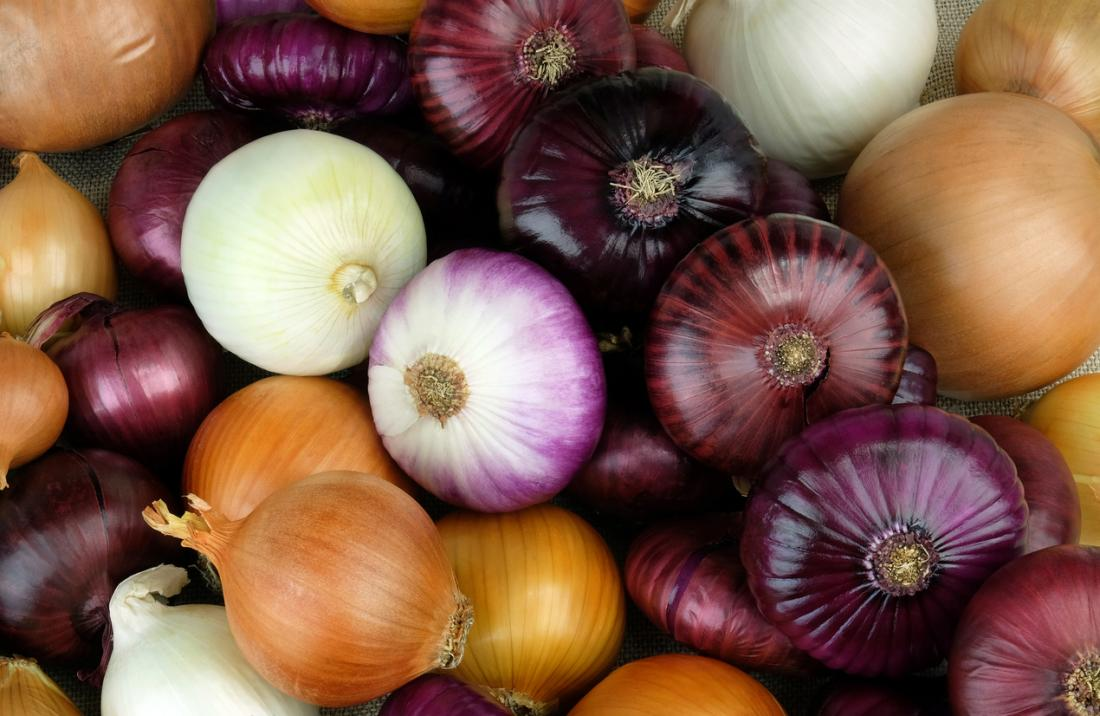
There many varieties to choose from, producing yellow, white or red onions, some spicy and tangy, others mild and sweet. Varieties mature at different times from early summer to early autumn. Some store particularly well, or are resistant to disease or bolting. 


Onions are usually grown from sets (immature bulbs) – this is the easiest and fastest way to grow them, and will produce an earlier crop. Plants grown from sets are also less likely to be affected by disease. However, they are more prone to bolting (when a flower is produced instead of a bulb), so choose heat-treated sets to reduce the risk. A few varieties are available for autumn planting and can be harvested a month or two ahead of spring-planted sets and most seed-raised plants. Onion sets are often sold in quite large packs, but if you don’t plant them all, they can’t be kept for planting the following year.

Seeds are usually cheaper to buy, more widely available, and with a greater choice of varieties. But the seedlings need to be looked after more carefully and the seeds don’t usually store well, so germination rates may decline if you keep the seeds from year to year.

Preparing the Ground

Choose a sunny planting site, with free-draining soil, and weed thoroughly. Onions have a limited root system, so improving the soil with lots of organic matter before planting is invaluable – dig in a bucket of garden compost or well-rotted manure per square metre/yard. This will add nutrients, improve the soil structure and hold moisture in the soil. Avoid using fresh manure.

You can also apply a high potassium general fertiliser, such as Vitax Q4, at a rate of one handful per square metre/yard.

Sowing

Although usually grown from sets, onions can be grown from seed, sown either indoors or outside, usually in mid- to late winter. To ensure a good crop, the resulting plants must be growing strongly by late spring, as the lengthening days trigger the formation of bulbs – the more leaves that plants have at this time, the better the bulb will be. A few overwintering varieties are available as seed, such as ‘Toughball’, which should be sown indoors in late summer.

Sowing indoors

Most onion seeds should be sown in mid- to late winter, although overwintering or Japanese varieties are occasionally available as seed for sowing in late summer.

Sow into modular trays filled with peat-free seed compost. Although one plant per module is effective, growing three to four per module saves space, although the resulting bulbs may be smaller. Sow two seeds per module for the first option, five or six for the second (then thin out the seedlings later if necessary). Place the tray in a heated propagator or on a warm sunny windowsill, at 10–16°C (50–60°F). Seedlings should appear within a couple of weeks. Remove from the propagator, place in bright light and keep the compost moist.

Harden off indoor-sown plants in spring (or early autumn for overwintering onions), before planting into prepared ground. Space plants 5–10cm (2–4in) apart, in rows 25–30cm (10–12in) apart. Don’t split up multi-seeded modules into individual plants – just plant them as they are, to form a clump of onion bulbs.

Onions don’t do well in acid soil (below pH 6.5), so if necessary reduce acidity by adding lime in autumn or winter.

Sowing outdoors

You can sow onions outdoors from late winter until mid-spring, once your soil is drying out and beginning to warm up. Sow seeds 1.3cm (½in) deep, in rows 20cm (8in) apart. Thin out the seedlings first to 5cm (2in) apart, and later to 10cm (4in). Closer spacing will result in more bulbs and a larger overall crop, but smaller individual bulbs.

Planting

Sets are usually planted in spring, from mid-March to mid-April. There are also a few varieties for autumn planting, often sold as overwintering or Japanese onions – these are less sensitive to cold, which would otherwise cause bolting. Autumn planting is not suitable in heavy soils prone to waterlogging, as the sets are likely to rot. But they can be planted on modules indoors instead, then transplanted outdoors in spring, which still gives them a head-start.


Planting outdoors

Plant sets 2cm (¾in) deep in drills or gently push them into loose soil, so the tip is just showing at the surface. Space them 5–10cm (2–4in) apart, in rows 25–30cm (10–12in) apart. Firm the soil around them and water well. Birds will often peck newly planted sets out of the ground, so cover with fleece until they’ve rooted in.

Another planting option is to cover the ground with black weed-suppressing membrane, then plant the sets through slits. There is then no need for weeding, which both saves time and avoids accidental damage to the bulbs when hoeing.
Onions can also be grown in large containers if you don’t have space in the ground or your soil is too damp. Use peat-free soil-based compost and a container that’s at least 45cm (18in) wide and deep. Plant the sets as described above.

Planting indoors

If your soil is very wet and cold, you can plant onion sets indoors, then transplant outside once the soil conditions improve. Use modular trays filled with peat-free multi-purpose compost and plant one set per module. Keep in an unheated greenhouse or on a sunny windowsill.

Plant CWatering

Water during any prolonged dry spells every 14 days, but stop watering once the bulbs have swollen in mid-summer. Watering spring-planted crops after mid-summer can mean they store less successfully. Try to avoid overhead watering, as this can encourage fungal diseases.

Feeding

In late winter, give autumn-planted onions a nitrogen-rich fertiliser, such as sulphate of ammonia, at a rate of 35g (1oz) per square metre/yard. This not only boosts growth but can also suppress premature flowering. Alternatively, use dry poultry manure. Also give an occasional feed with a general liquid fertiliser, from spring to mid-summer.

Weeding

Onions don’t grow well if competing with other plants, so weed between them regularly. Take care not to damage the bulbs or foliage if using a hoe – ideally, weed by hand. As onion foliage casts little shade, weeds grow readily and can soon swamp the crop, which would reduce the plants’ growth and subsequent bulb size.

Removing flowers

Remove any flower stems as soon as they start to form, otherwise the plant’s energy will go into producing the flower rather than swelling the bulb. It also means the bulb won’t store well.

Harvesting

Autumn-planted sets are ready to harvest by early to mid-summer, while spring-planted sets and seed-raised onions are ready from late summer to early autumn.

Although it’s sometimes suggested to bend over the foliage or gently lift the bulbs to break the roots, this is no longer recommended. Yellowing and toppling of the foliage is a sign that the crop is reaching maturity. Harvest before the foliage dies down completely. Carefully lift the bulbs with a fork, taking care not to damage or bruise them, as this could cause them to rot in storage. Use any damaged onions straight away.

Storing

Dry your onions for about two weeks before storing – place them in full sun outdoors on wire racks, or similar, so air can circulate beneath them. Alternatively, if the weather is damp, dry them in a sunny greenhouse or well-ventilated shed.

Once all the foliage is papery and dry, put the onions in net bags or trays in a single layer, or tie them into plaits and hang up. Keep them in a light, cool, dry and well-ventilated place – don’t store in the dark, as this encourages sprouting.

Autumn-planted onions will store until early winter. Spring-planted or seed-raised onions can last until well into the following spring.

Problems

Onions are relatively trouble free, although they can be affected by several fungal diseases, especially in damp growing conditions or if poorly stored. Flowering (bolting), caused by low temperatures in spring, means bulbs won’t store well. Birds also tend to pull up newly planted onion sets, so cover them with fleece until rooted in.

 source   (COPIED AND ADAPTED BY CHARLES O CHUKWUBIKE)

Wednesday, 23 October 2024

NENWE -ON-LINE(Nol) UNIVERSITY NEW PROGRAMS ANNOUNCEMENT.


The NOL Board of Directors, and the NOLU  Management, are pleased to announce the introduction of two new programs in the lifelong learning programs of the University.


1. NKORO DISCUSSION
The "Nkoro Discussion" will be anchored by Prof. Sai Nwenya, and  moderated by Chief Charles O Chukwubike .

Firstly, the program focuses on topics and questions from the  remote and contemporary history of Nenwe and the Igbos.
Some other  discussions in this program will have the flavours of the discussions that were, and  still being held in the Nenwe and Igbo traditional societies. It aims to lend some clarity to the not easily understood customs and traditions of the Nenwe people, while taking a fresh look at the commonly observed cultural practices also of the Nenwe people. The program also hopes to draw the discussion ideas and topics from its worldwide audience. Please feel free to participate with your presence, questions, or suggestions of topics and/or ideas for discussion or how the program can be improved upon.
It will debut on Saturday, October 26, 2024 @ 5 PM, Nigeria local time, at the NOLU virtual auditorium.

2. "IRRECONCILABLE DIFFERENCES"
When communication between people, especially between closely related pairs,  breaks down, irretrievably, it does come with some costs, both tangible and intangible.
This new program aims to take the university audience through important flashpoints with the view on recognizing when you and your pair have arrived at each of those flashpoints and when reconciliation could still be available and on the table.
Engr. Cornelius Okwudiri Ani , is the sole anchor. He will be broadcasting from Atlanta, in the State of Georgia, The United States.
The Program has been scheduled to debut on Monday, November 4, 2024, @ the virtual auditorium of the NOLU. It will be simultaneously broadcast on the NOL general platform. Its start time is 5 PM, Nigeria local time.
These two programs are respectively approved to run for a term of six months from its debut. Each will be subject to a possible mutually agreed renewal at the expiration of each term.
The University looks forward to your characteristically strong patronage and enduring support for these two new programs.
Thank you.
Signed
The NOLU Management
NENWEONLINE@GMAIL.COM

Thursday, 15 February 2024

Attention deficit hyperactivity disorder (ADHD)

Attention deficit hyperactivity disorder (ADHD)

CAUSES

The exact cause of attention deficit hyperactivity disorder (ADHD) is not fully understood, although a combination of factors is thought to be responsible.

Genetics

ADHD tends to run in families and, in most cases, it's thought the genes you inherit from your parents are a significant factor in developing the condition.

Research shows that parents and siblings of someone with ADHD are more likely to have ADHD themselves.

However, the way ADHD is inherited is likely to be complex and is not thought to be related to a single genetic fault.

Brain function and structure

Research has identified a number of possible differences in the brains of people with ADHD from those without the condition, although the exact significance of these is not clear.

For example, studies involving brain scans have suggested that certain areas of the brain may be smaller in people with ADHD, whereas other areas may be larger.

Other studies have suggested that people with ADHD may have an imbalance in the level of neurotransmitters in the brain, or that these chemicals may not work properly.

Groups at risk

Certain people are also believed to be more at risk of ADHD, including people:

who were born prematurely (before the 37th week of pregnancy) or with a low birthweight

with epilepsy

with brain damage – which happened either in the womb or after a severe head injury later in life.

If your problems are recent and did not occur regularly in the past, you're not considered to have ADHD. This is because it's currently thought that ADHD cannot develop for the first time in adults.

Other possible treatments

There are other ways of treating ADHD that some people with the condition find helpful, such as cutting out certain foods and taking supplements. However, there's no strong evidence these work, and they should not be attempted without medical advice.

Diet

People with ADHD should eat a healthy, balanced diet. Do not cut out foods before seeking medical advice.

Some people may notice a link between types of food and worsening ADHD symptoms. If this is the case, keep a diary of what you eat and drink, and what behaviour follows. Discuss this with a GP, who may refer you to a dietitian (a healthcare professional who specialises in nutrition).

Supplements

Some studies have suggested that supplements of omega-3 and omega-6 fatty acids may be beneficial for people with ADHD, although the evidence supporting this is very limited.

It's advisable to talk to a GP before using any supplements, because some can react unpredictably with medicine or make it less effective.

You should also remember that some supplements should not be taken long term, as they can reach dangerous levels in your body.

Tips for parents

If you're the parent of a child with ADHD:

be sure your GP or specialist helps you understand the difference between ADHD and any other problems your child may have

think about who else needs to know about your child's ADHD, such as their school or nursery

find out the side effects of any medicine your child takes and what you need to look out for

getting to know people at local support groups can stop you feeling isolated and help you to cope

Exercise

Make sure your child gets lots of physical activity during the day. Walking, skipping and playing sport can help your child wear themselves out and improve their quality of sleep.

Make sure they're not doing anything too strenuous or exciting near to bedtime.

Read our physical activity guidelines for children and young people, which includes information on getting active, and how much activity you and your child should be doing.

Eating

Keep an eye on what your child eats. If your child is hyperactive after eating certain foods, which may contain additives or caffeine, keep a diary of these and discuss them with a GP.

Bedtime

Stick to a routine. Make sure your child goes to bed at the same time each night and gets up at the same time in the morning.

Avoid overstimulating activities in the hours before bedtime, such as computer games or watching TV.

Night time

Sleep problems and ADHD can be a vicious circle. ADHD can lead to sleep problems, which in turn can make symptoms worse.

Many children with ADHD will repeatedly get up after being put to bed and have interrupted sleep patterns. Trying a sleep-friendly routine can help your child and make bedtime less of a battleground.

Help at school

Children with ADHD often have problems with their behaviour at school, and the condition can negatively affect a child's academic progress.

Speak to your child's teachers or their school's special educational needs co-ordinator (SENCO) about any extra support your child may need.

Adults with ADHD

If you're an adult living with ADHD, you may find the following advice useful:

if you find it hard to stay organised, then make lists, keep diaries, stick up reminders and set aside some time to plan what you need to do

let off steam by exercising regularly

find ways to help you relax, such as listening to music or learning breathing exercises for stress

if you have a job, speak to your employer about your condition, and discuss anything they can do to help you work better

if you're at college or university, ask about what adjustments can be made to support you, such as extra time to complete exams and coursework

talk to a doctor about your suitability to drive, as you'll need to tell the Driver and Vehicle Licensing Agency (DVLA) if your ADHD affects your driving

contact or join a local or national support group – these organisations can put you in touch with other people in a similar situation, and can be a good source of support, information and advice

Source 

Sunday, 4 February 2024

CANCER : WHAT YOU MUST KNOW

What is cancer ?

Cancer is a disease which occurs when changes in a group of normal cells within the body lead to uncontrolled, abnormal growth forming a lump called a tumour; this is true of all cancers except leukaemia (cancer of the blood). If left untreated, tumours can grow and spread into the surrounding normal tissue, or to other parts of the body via the bloodstream and lymphatic systems, and can affect the digestive, nervous and circulatory systems or release hormones that may affect body function.

Cancer tumours can be divided into three groups: benign, malignant or precancerous.

1. Benign tumours are not cancerous and rarely threaten life. They tend to grow quite slowly, do not spread to other parts of the body and are usually made up of cells quite similar to normal or healthy cells. They will only cause a problem if they grow very large, becoming uncomfortable or press on other organs - for example a brain tumour inside the skull.

2. Malignant tumours are faster growing than benign tumours and have the ability to spread and destroy neighbouring tissue. Cells of malignant tumours can break off from the main (primary) tumour and spread to other parts of the body through a process known as metastasis. Upon invading healthy tissue at the new site they continue to divide and grow. These secondary sites are known as metastases and the condition is referred to as metastatic cancer.

3. Precancerous (or premalignant) describes the condition involving abnormal cells which may (or is likely to) develop into cancer.

Cancer staging

The classification of cancer by anatomical extent of the disease, i.e. stage, is essential to patient care, research and cancer control. The UICC TNM staging system is the common language adopted by oncology health professionals to communicate on the cancer extent for individual patients. Once the stage of cancer is known and understood, this is often a basis for deciding appropriate treatment and individual prognosis. It can also be used to inform and evaluate treatment guidelines, and constitutes vital information for policy-makers developing or implementing cancer control, prevention plans and research.  

The TNM classification focuses on the anatomical extent of the tumour and is determined by assessing the following categories:  

· T describes the size of the main (primary) tumour 

· N describes whether the cancer has spread to the nearby lymph nodes

· M describes whether the cancer has metastasised (spread from the primary tumour to another part of the body)

Managing and treating cancer 

Your treatment depends on the type of cancer, where your cancer is, how big it is, whether it has spread, and your general health. The general types of treatments include: surgery, chemotherapy, radiotherapy, hormone therapy, immunotherapy, and gene therapy. 

Surgery

If a cancer has not metastasised (spread), surgery can remove the entire cancer which may completely cure the disease. Often, this is effective in removing the prostate or a breast or testicle.

Radiotherapy

Radiation treatment or radiotherapy uses high-energy rays to reduce a tumour or destroy cancer cells as a stand-alone treatment and in some cases in combination with other cancer treatments.

Chemotherapy 

Chemotherapy uses chemicals to interfere with the way cells divide - damaging of DNA - so that cancer cells will destroy themselves. These treatments target any rapidly dividing cells (not necessarily just cancer cells), but normal cells usually can recover from any chemical-induced damage while cancer cells cannot. Chemotherapy is generally used to treat cancer that has spread or metastasised because the medicines travel throughout the entire body. It is a necessary treatment for some forms of leukaemia and lymphoma. 

Immunotherapy 

Immunotherapy uses the body's own immune system to fight the cancer tumour. Immunotherapy may treat the whole body by giving an agent that can shrink tumours.

Hormone therapy 

Several cancers have been linked to some types of hormones, including breast and prostate cancer. Hormone therapy works to change hormone production in the body so that cancer cells stop growing or are killed completely.

Gene therapy 

The goal of gene therapy is to replace damaged genes with ones that work to address a root cause of cancer: damage to DNA. Other gene-based therapies focus on further damaging cancer cell DNA to the point where the cell destroys themselves. However, gene therapy is new and has not yet resulted in any successful treatment 

Survivorship 

Survivorship focuses on health and the physical, psychological, social and economic issues affecting people after the end of the primary treatment for cancer, including people who have no disease after finishing treatment, people who continue to receive treatment to reduce the risk of the cancer coming back and people with well controlled disease and few symptoms, who receive treatment to manage cancer as a chronic disease. 

Survivorship care includes issues related to follow-up care, the management of late side-effects of treatment, the improvement of quality of life and psychological and emotional health. Survivorship care includes also future anticancer treatment where applicable. Family members, friends and caregivers should also be considered as part of the survivorship experience. 

Palliative care 

Palliative care runs throughout a patient’s journey from diagnosis to cure or end of life, and is designed to relieve symptoms and improve a cancer patient’s quality of life. It can be used to respond to troubling symptoms such as pain or sickness, and also to reduce or control the side effects of cancer treatments. In advanced cancer, palliative treatment might help someone to live longer and to live comfortably, even if they cannot be cured.

Key Cancer Facts

Cancer is the second-leading cause of death worldwide.

10 million people die from cancer every year.

More than 40% of cancer-related death could be preventable as they are linked to modifiable risk factors such as smoking, alcohol use, poor diet and physical inactivity.

Almost at least one third of all deaths related to cancer could be prevented through routine screening, and early detection and treatment.

70% of cancer deaths occur in low-to-middle income countries.

Millions of lives could be saved each year by implementing resource appropriate strategies for prevention, early detection and treatment.

The total annual economic cost of cancer is estimated at US$1.16 trillion.

source

Thursday, 18 January 2024

THE REVIEW 17.01.2024


I took some time to review the learning and teaching( or a part of the debates) we had on this forum yesterday. A debate  borne out of a misunderstanding of a statement which was explained later to even mean the opposite of the apparent viewpoint they were being engaged by some people ie. .*destruction  of a myth* meaning a finality of the truth in  a belief system.A misunderstanding of this concept.

In the debate it was disappointing to observe some writers or resource persons not being open and direct with information they claim to be in possession.This goes against every law in Education and learning.

This University was initiated because I saw the need for a  place people will in the real spirit of educationists and specialists in didatics give information and impact learning freely and selflessly. This is the spirit of this academy which the operators in all levels are doing great.

A teacher is a person who first and foremost wants to see what he teaches flourish, that is his first payment.  It is  a sentiment you must have or cultivate  to be happy to teach. It is an honourable and heavy to bear sentiment which not everyone is  able to understand and draw the happiness therefrom .No Wonder our ‘poor’ primary and junior school teachers still remain happier  than us when we have even become doctors,lawyers, architects engineers, etc

In conclusion ,I call on most of us that have resource materials to be more generous with them and make them available during teaching without putting students in much suspension and doubts by leaving many gaps, you will  still  be quoted even if it is not yet in a paperback we are already on that level.

Thanks

Charles O Chukwubike 

The VC / Online Moderator 

Nenweonlineuni@gmail.com

Thursday, 11 January 2024

'MATTERS ARISING ' by: Chukwubike O Charles

Chukwubike O Charles 
There was an issue that came up yesterday which I want to make my personal opinion on.

Dr Leo's presentation of another probable meaning or interpretation of the proverb was an academic exercise and is exactly why we are here especially in a ‘tone” language as ours where one thing could mean twenty.

A critical analysis or thinking of postulations is what the school prepares us for and are also the foundation of development in science and arts. 

In medical school we are not just taught how to pull out babies from women or “yank stubborn" ones from the womb. We are thought  and encouraged to query those systems and methods and these invariably helped in the development of science. I think I've read one of Dr.Chukwualis' papers on this for example.

We have many wrong or inappropriate ways and thoughts which we perceived or received wrongly from our parents or society that shaped our lives and that these critical analysis have addressed . Look at the time it is still taking us to understand that cold pack is more appropriate when we hit our toes on a rock than the age long *miri ọkụ with essential balm or Aboniki combination* which is wrong! 

That most convulsions in babies come from and with high body temperature and that one of the fastest remedies is to lower the body temperature,instead of the *élú akụ* (nshiku system that was passed to us) which we use to massage the baby's body and which works the opposite because it closes the skin pores and insulates it thereby trapping the heat inside the baby due to no passage of oxygen and water from the skin and hair roots already blocked with the oil or other fats we used . These are some of the wrong notions critical thinking and research in science continue to develop.

This is why we are here and this is why we are encouraged to listen to every opinion. This is different from what we call “blind arguments” in the street.

Good morning all 

Charlie.mbc@gmail.com

Tuesday, 23 June 2020

AHA M BỤ NAIJIRIA By Sai Nwenya

 AHA M BỤ NAIJIRIA


A bụ m agbara nwaanyị.
Nnukwu nwaanyị mara nnukwu mma ka m bụ
E topuru m etopu
I lee m anya n'obi, ị ga-ahụta na obi m sara mbara
Obinigwe kechara m nye m nnukwu ogbe araa abụọ maka iji zụọ ọtụtụ ụmụaka ọ chọrọ ka m mụọ
Araa m ndi a na-agbapụta mmiri araa dị nnukwk ụtọ kwamgbe kwamgbe

Ụmụaka m na-añụrịkwa mgbe ha na-amịrị mmiri araa m ndi a dịka nwa-ehi si amị nke nne ya
Ụwa kpọrọ araa m ndi a Naija na Benuwee
Chukwu Okike Abịama kechara m sụnye m ìkè n'ime oke osimiri Atlantiki

Ebe ahụ ka m gbanyere mgbọrọgwụ
Nke a mere m ji amị mkpụrụ ma n'udummiri ma n'ọkọchị

Site n'isi m rue n'ụkwụ m bụ naanị akụnụba juputara ya
Ka m na-asụpụta mmiri bụ ka m na-asụpụtakwa mmanụ, ọlaọcha, ọlaedo, ọlaigwe, unyi kol nakwa okwute ndiọzọ dara oke ọnụ ahịa

A mara m ama na mba ụwa niile dịka ezenwaanyị, akajiakụ, ọnyịrịmmagba, ọkaibe nakwa aha ndiọzọ na-ada ụda
A dị m afọ iri isii mana a ka m na-atụkwa ime na-amụ ụmụ
Mgbe ọbụla m guzoro ọtọ, ihe eji amata m bụ na akụkụ m nke a na-acha akwụkwọ-ndụ akwụkwọ-ndụ; akụkụ m nke ọzọ na-enwu ọcha dịka akụmmiriigwe

Ihe nke a pụtara bụ na abụ m onye udo ma dịkwa uchu n'ọrụ ugbo
Ka Chi m si hụ m n'anya, mmiri na-ezoro m mgbe o kwesiri izo

Anwụ na-achakwara m mgbe o kwesiri ịcha
Eke kere ụwa kere m ma chọọ m mma
Na-agbanyeghị na m dị afọ iri isii
A ka m dịka nwaagbọghọ dị afọ iri na asatọ na-amaghị nwoke ọbụla
Mma m na-eto ụmụnwoke akpịrị nke ukwuu
Ewoo! Chukwu kere m, ekele dịrị gị

N'ime iheọma niile ndi a Chukwu jiri chọọ m mma, a nọkwa m n'ime iru uju
Anyammiri ejula m anya
E begbuela m onwe m n'akwa
Enweghịkwa m onye na-agụgụ m
Ndi na-eme m ibe akwa gbara m gburugburu

Mụ na Rachel na-amazị aka onye ka ibe akwa n'ihi ihe ndi mmadụ na-eme m

Ndintọ atọrịkpụọla ụmụ m
Ndinchịehi na-asụkwa ụmụ m akwụ ma kwụwa ha agụụ
Ndi-ọlụọ-ọlaa nke akpọrọ banditi na-egbukwa ụmụ m ka a na-egbu ọkụkọ

Ọ bụghị sọ ihe ndi a ka m na-ebere akwa
Ndi ụfọ-nfọjuakpa na-ebufe akụnụba m obodo ndiọcha ka a ga-asị na ha amaghị na ndiọcha emeela m echeta ebewe na mbụ

Ọbara na-agbapụtazịkwa m n'anya n'ihi na anyammiri agwụla m n'anya
Anyaukwu ụfọdụ ụmụ m na-egbuzịkwa ụmụ m ndiọzọ
N'ihu m ka naanị otu onye na-ebu ihe dịịrị ọha rie ma kpọọ onwe ye Ọkaaomee
A dịzị m ka nnekwu-ọkụkọ nke mụrụ ọtụtụ ụmụ
A mazịghị m nke bụ dịọkpara m na nke bụ isi ada m

Ndi mba ọzọ na-abatazị m n'ime n'ikem n'ikem 
Ha na-abịa ñụrụ araa m ma bukọrọkwa akụnụba m gbalaga
Ebe agụụ jizi iwe na ọnụma apịa ụmụ m ịtarị n'ihu m
A dịzị m ka akịdị
A mazịghị m ebe oke ala m dị
Amazịghị m ụmụ m na ndi ọbịaa m ndi nke kazị ibe ha

Aha m bụkwa ekwenchịta!
Ndi-nkịtị agbalịala ịchị m n'ụdị nke ha kpọrọ palịamenti mana ihe enweghị isi
Ndiagha anwaala ike ha site n'ụda egbe ma ije ekweghị ojije
Ndi nkịtị nke onye kwue uche ya ahapụla onye kwue uche ya banye na nke onye mee uche ya

Ebe iwu eji achị m nwere ike bụ naanị n'ahụ ndi opekatampe
Iwu ndi a enwezịghị ike kọpọ maọbụ nke afụ n'ahụ ndi okeozu na nke ndi ọchịchị
Kedu ihe ga-egbochi m iru uju?
Kedu ihe ga-anapụ m ibe akwa?
Ọnụahịa mmanụ m akpụọla n'ala na mba ụwa

Ego m dịzị ka mpekere akwụkwọ nkịtị n'ebe ndi ogbo ya ndi ọzọ nọ
Ụmụaka m ewerela akaazụ na iri ngarị rigbue onwe ha ma rigbuokwa mụonwe m
Ụmụ m ndi ụbụrụ ha na-acha ọkụ jizi ọsọ agbapụ n'ime m were agbaga mba ọzọ ebe eji ha eme ihe ọchị
Na mbụ, ị kpọọ m aha na mba ofesi isi m eguzoro kwem 

Mana ugbu a, ị kpọọ m aha n'obodo ndi ọzọ ihu agbarụọ m maka na ha na-ekpuchi aka n'imi ka m na-esi isi
Onye ga-etikwanụ m aka n'obi? 
Biko zaa nụ m!
Aha m bụ Naijiria!!
Nnukwu obodo nke Afrika!!!

Sai Nwenya

Saturday, 6 June 2020

IKO UWA / ILO UWA IN NENWE MYTHOLOGY

The most powerful spiritual native doctor in Yoruba land Nig ...What is the importance of IKO UWA in Nenwe Mythology? And can that align to DNA tests in modern day paternity checks? 
question by Mr Martin Okafor.

FURTHER QUESTIONS & PRELIMINARY REACTIONS:
  • This is a big one. A belief in life after death. Why do the dead person come back not just to one person but sometimes to many families as well as in both sexes? (Engr. Aaron Okorie Ph D).
  • Some living legends are said to lọọ ụwa la ṅdụ.
  • Though my family is Christian and we don't go to where ịkọ chi is done, it was said my grandfather,  Mazi Lazarus Ọrjị Ugwueke, lọtarụ m la ṅdụ. (Ogbuevi Tony.Osy. Ugweke)
  • Sir, I guess, this concept is too deep. I have heard about Ilo UWA la ndu. there are lots of complexities in this concept. What about those women that lost their husbands early enough, probably were persuaded to stay back and have kids for her late husband. And in this instance, those kids that came after the husband must have died, how does ilo uwa apply here? When we all know that the kids came through a man not from that family.(Martin Okafor).
  • Haaaa!! My bossom brother, are those children born " behind" their fathers not members of their fathers'  families?
    As long as the uncle of such children take them to the native priest to inquire who incanated into them,  there will be an answer.
    I have never heard that someone was taken to where to find out " onye lotaru ya" and the result came out negative. The process continues until the egg breaks, which signifies authentic result. I have never heard of rejected result of such an inquiry to call for a repeat. So,  ikuwa is one of the numerous cosmovision's ( relationships between the physical world and the spiritual world) that characterize indigenous knowledge. There are instances, the dead man or woman will inform his or relation in a dream that he or she ( the deceased) is coming to the family. If the deceased has a scar or wound the new born baby will have that scar to confirm once lotaru ya, without going to see a fortune teller.      
    Okammuta Ede (Godwin Chukwu Ph D)

Thursday, 7 May 2020

WHY SOME PEOPLE TALK GOOD OF THE DEAD by Chukwubike OC


WHY SOME PEOPLE TALK GOOD OF THE DEAD;
The human being (especially in some cultures as in Africa) is  very religious and believe in the existence of *SPIRITS*, therefore when a  person dies or passes over to another state or journey  most people  believe  he has joined the spirits and has  acquired all the powers attributed  to spirits  who are also believed with the Gods govern the living .
  • This per se makes us afraid of attracting their wrath and fury  if  we ever say bad of them or  refer to any bad  they did while being with the living. This affects  our presentations and funeral orations to tend to positive things and moments of the dead.
  • On another instant,  some people would just want to appear polite to the family of the dead therefore saying  all nice things they know, imagine and sometimes absolute (positive)lies about the dead person. Sometime these are   to curry favour.
  • The third group just go with the trend. They repeat in other-words, ’copy and paste’ what others just said  and continue  with their food, drinks and other entertainments. when served. 
*Personal notes*
Some of us who believe that a person  while alive is made up of the body and spirit  may not be afraid  to speak about the dead  as we would have spoken when he was alive because he just dropped the body and only  the spirit we knew all the while  has just continued the course. In simple words ‘if I wasn’t afraid of  him when he was in two states why should I be afraid  of  him now he is in only one state?
People like this in some cases fall or incline  a bit towards  the second category also as not to aggravate the pains of the  mourners   by saying  ‘negativities’ of the dead person.
Written by 
Charles.O Chukwubike
Charlie.mbc@gmail.com

Saturday, 2 May 2020

The Nenweonline University...The beginning.. The blog

Since the closure of yahoo groups and our migration to the WhatsAppp platform  the nenweonline has experienced the restrictvness of WhatsApp in presenting elaborate educative and learning materials for our members who in these years have craved and demanded more of such.
We have tried to accommodate this important aspect in our *mother chat group* but presentations seem to loose value and sometimes become boring to some people who may not be interested in some academic topics being discussed or who already have a wealth or knowledge in the matter being discussed. This is also very frustrating to our teaming specialists who are eager to teach,debate, expose, elaborate or answer some questions. 
Dr Fidel Nwabueze-Ogbo among others have been on the forefront in the creation of platform for this.Some  of my colleagues in the educational, didactic and learning specialization (with great experiences in the group) have been brainstorming on how to go about this especially giving the nature that it is a project geared towards a tomorrows online and physical  educational and research institute. Many of them believe its it possible: I believe it is possible though a difficult task which the collective efforts of dedicated people of goodwill will make come through.
The steps so far:

  • I have created a blog like the one  I did for nenweonline called nenweonlineuni.blogspot.com (https://nenweonlineuni.blogspot.com/) which for now is visible to people on invitation until it is fully optimised. 
  • People are invited to discuss any topic which would be followed by reactions and questions. 
  • There is no copyright to any paper presented as of now but members are advised to make respectful use and references whenever they use or access our materials. 
  • There shall be a special WhatsApp group though most topics may have a link sent to the general NOL groups for interested persons to click and get into Discussion. 
  • Other social media platforms will be connected like a Facebook page and group.
  • Maximum respect is expected from everyone accessing the blog. 
  • Writers will have a Gmail account to access the blog. 
Other rules and regulations shall be jointly made by us as we march on. 
I am
Charles Okechukwu Chukwubike 
(Educational/Learning  Psychologist) 
1st May 2020